


Lest we forget
For teachers looking for the best children’s books about war and remembrance for the classroom our editorial team has selected and reviewed a range of recommended books for Key Stages 1, 2 and 3, including picture books, poetry collections, class readers and graphic novels. These carefully chosen titles help teachers introduce age-appropriate discussions about Remembrance Day, the World Wars, conflict, courage, friendship and the human impact of war. Many also include free teaching resources, discussion activities and creative downloads to support classroom learning.
Recommended Children's Books About War and Remembrance
Books About War for Key Stage 1
Usborne’s Lift the Flap Questions & Answers: Why Are There Wars? by Katie Daynes, Mairi Mackinnon and Oksana Drachkovska. Across double-page spreads, questions are posed and a lift-the-flap feature provides the answers in this clear, age-appropriate way. A valuable resource for teachers and all those working with young children, you can also find a fun and engaging activity pack focusing on the theme of peace.
The Messenger is the debut picture book by Lyndsay Roberts Rayne that tells the moving story of a WWI messenger dog. It is a beautiful, sensitive, almost wordless story that would be ideal for use in an assembly or to spark class discussions. Accompanying the book is a subtitled draw-along video in which the author guides the viewer through drawing the little dog, Nell.
Recommended War and Remembrance Books for Key Stage 2
Words from War by Joseph Coelho and Flora Delargy is a collection of poetry about conflict. In his foreword, Coelho states that poetry is the medium best suited to dealing with the emotions generated by war, and the poems he has chosen provide readers with a clear and vivid understanding of its impact. There are poems from across the centuries, about conflicts ranging from the Trojan War to more recent bloodshed in Syria and Ukraine, each illustrated in watercolour by Flora Delargy. Accompanying the book is a resource pack with discussion cards, language activities, poet profiles and creative comparison tasks, designed to encourage debate and deepen pupils’ understanding of war and its human impact.
Onjali Q. Raúf’s The Lion Above the Door is a favourite classroom read and, at this time of year, is particularly appropriate. It is a remarkable story about forgotten heroes of the Second World War, uncovered during a school project, and touches on themes of historical racism, shared histories and friendship. There is a brilliant and detailed resource pack to aid discussion and comprehension, with activities spanning many curriculum subjects.
Recommended to War and Conflict Books for Key Stage 3
War by Eoin Colfer, Andrew Donkin and Giovanni Rigano is the third timely and powerful graphic novel this team has produced, following Illegal and Global, and will be another must-have for every school library. It pulls no punches as it examines some of the effects of war on those drawn into it, particularly two young people who find themselves on opposing sides. Designed to encourage close reading, empathy, creativity and discussion, the accompanying resources invite pupils to explore the experiences of children and families affected by conflict and its impact on their lives.
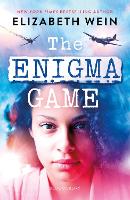
The Enigma Game by Elizabeth Wein is a cracking WWII story in which a young Jamaican Briton’s ingenuity makes a remarkable impact. Teeming with drama and compelling code-cracking action, this WWII thriller is driven by the lives of three young people determined to make their mark on the war effort, and by the life-affirming relationship between fifteen-year-old Louisa and the elderly woman she’s employed to look after. Suitable for readers aged 12+, this resource pack includes extracts from the text, discussion questions and activities, including a section about the Enigma machine that changed the course of the Second World War.
In Support of the teaching of Remembrance, additional Schools Resources for Armistice Day
* Author, Tom Palmer is a LoveReading4Schools favourite; he is a master at bringing the past to life and tells the story of complex, and often harrowing, historical events in an accessible style. Tom has created a collection of classroom resources including discussion points and ideas for a special assembly for Remembrance Day. Find more at tompalmer.co.uk/remembrance-day.
* The British Legion have free lesson plans and activities linked to the National Curriculum for Key Stages 1-5, for use at home and in the classroom. www.britishlegion.org.uk/get-involved/remembrance/teaching-remembrance
* You can also find Assembly Packs, films and interviews on BBC Teach, for both primary and secondary students - including a link to the special Literacy Live Lesson on Wednesday 8th November. www.bbc.co.uk/teach/remembrance-sunday
You can also find further reading in our special Reading Lists:
Armistice Day is on 11 November and is also known as Remembrance Day. It marks the day World War One ended, at 11am on the 11th day of the 11th month, in 1918.








Comments (0)
Leave A Reply
You must be logged in to post a comment.